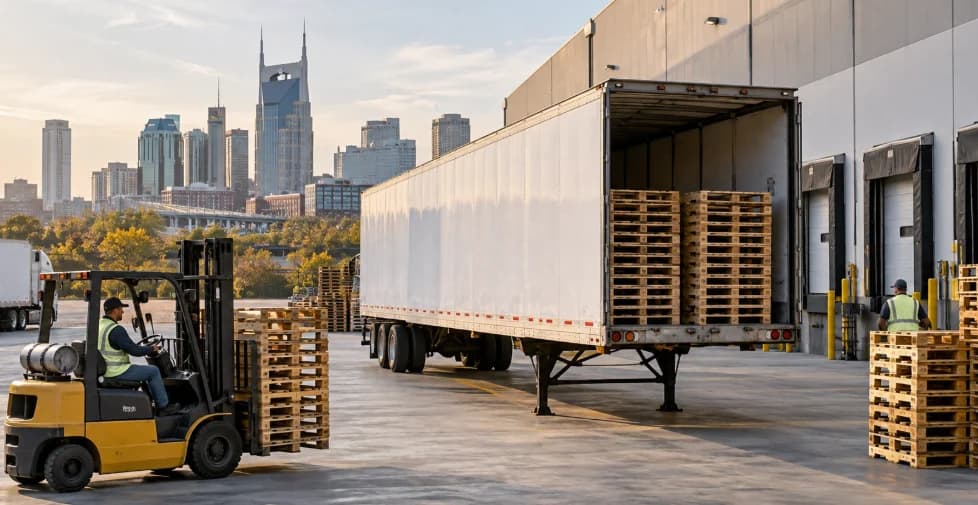
Nashville pallet removal becomes a bigger operational issue when a warehouse starts moving more freight but doesn’t gain much extra dock, staging, or yard space. More inbound loads usually mean more wood pallets moving through the building, and those pallets don’t always leave at the same rate. At The Pallet Squad, we work with warehouses that need a defined removal process so excess pallets have somewhere to go before they start competing with active operations.
For a growing facility, the useful question isn’t simply how many pallets are sitting outside today. Look at how quickly they accumulate, where employees put them, how often they get moved, and whether the same pile returns after every pickup.
Why Nashville Pallet Removal Becomes a Space Issue During Growth
Warehouse growth changes pallet flow.
A facility may add another customer, increase receiving volume, expand inventory, or run more outbound loads without changing the physical footprint of the building. Suddenly, space that used to handle a few stacks of empty pallets needs to support product staging, equipment movement, or another active dock door.
The pallet pile gets pushed somewhere else.
That temporary location often becomes permanent until someone needs the space again. Employees move the pallets across the yard, then move them another time when pickup is scheduled. As volume increases, the warehouse spends more time managing material that has already left active use.
This matters around Nashville because freight movement already places significant demands on the region’s transportation network. The Tennessee Department of Transportation’s Downtown Nashville Interstate Corridors study covers major sections of I-24, I-40, I-65, and I-440 while examining congestion, connectivity, and travel-time reliability.
Inside the warehouse, the same basic principle applies. Space and movement become harder to manage as activity increases.
Find Out Where the Pallet Space Is Actually Going
Before changing the removal schedule, watch the warehouse for a normal week.
Start at receiving. Once employees unload inbound product, where do the empty pallets go?
Some may return to usable inventory. Others might require ownership review or a separate return process. Approved unwanted pallets need a clear destination.
Pay attention to where temporary stacks appear. A pile beside receiving tells you something different from a pile at the far end of the yard. Pallets near dock doors often indicate that employees don’t have a practical collection point nearby. Stacks scattered across several locations may show that different shifts or departments are following different processes.
Also watch how many times employees touch the same pallet.
If a forklift moves a pallet from receiving to temporary staging, later moves the stack outside, and then handles it again for removal, the warehouse has created several tasks around one unwanted pallet.
That workload becomes much easier to notice once volume rises.
Separate Usable Pallets From Pallets That Need to Leave
Growing warehouses sometimes treat every empty pallet as one inventory category. That creates confusion quickly.
Some pallets still belong in the operation. Others may qualify for resale or recycling. Pallets with unclear ownership or markings need review before they enter a removal program.
Create defined destinations before the piles grow.
The receiving team should know where usable company-owned pallets return, where questionable pallets wait for a decision, and where approved unwanted pallets go.
This also gives purchasing a clearer picture of actual pallet inventory. A warehouse can appear to have hundreds of pallets available while many are damaged, incompatible with the operation, awaiting return, or already designated for removal.
For facilities reviewing their options locally, our Nashville pallet services include pallet supply, pickup, purchasing, and drop trailer service.
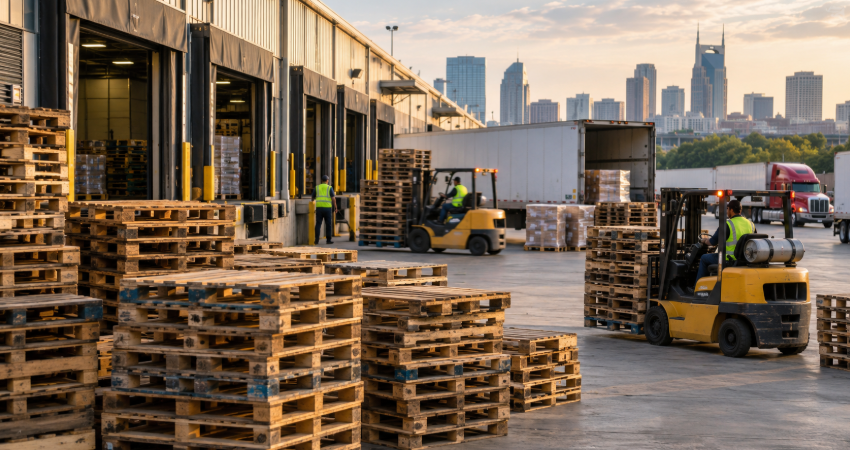
Match Pallet Pickup Frequency to the New Warehouse Volume
A pickup schedule that worked before an expansion may stop working afterward.
Suppose a facility used to accumulate enough unwanted pallets for removal once every few weeks. After adding another customer or increasing inbound volume, that same quantity might appear every several days.
Keeping the old schedule means the warehouse has to store the difference somewhere.
Track how long it takes the approved collection area to fill. You don’t need a complicated inventory system. A simple weekly record of approximate pallet volume, collection-area capacity, and unusual receiving activity gives the operations team useful information.
After several weeks, a pattern usually becomes easier to see.
If pallet accumulation stays occasional, a scheduled pallet pickup service may still fit the operation. The facility stages the pallets and arranges removal based on its volume.
Continuous accumulation creates a different problem.
Consider a Drop Trailer When Pallets Keep Reclaiming Warehouse Space
A growing facility shouldn’t have to repeatedly sacrifice indoor or outdoor working space while waiting for the next pallet pickup.
For businesses generating eligible unwanted wood pallets throughout the week, drop trailer pallet recycling creates a dedicated collection point on the property.
Warehouse personnel load approved pallets into the trailer as they come out of circulation. The trailer is then exchanged according to the service arrangement rather than leaving the operation to build another temporary pallet pile between pickups.
That changes the flow inside the facility.
Employees know where the pallet is going before they move it. Receiving doesn’t need to create another stack because the normal staging area filled sooner than expected. Operations also gain a more consistent footprint for pallet collection instead of allowing the storage area to expand and contract throughout the month.
A drop trailer still requires planning. The warehouse needs an appropriate place for the trailer, practical access for employees loading pallets, and enough room for delivery and exchange.
Don’t Give the Trailer the Space You Were Trying to Recover
Moving pallets into a trailer doesn’t automatically solve a space problem if the trailer itself sits in the wrong place.
Review the yard during its busiest operating period.
A space that looks unused in the morning may serve outbound staging later. An open area near receiving may sit directly in a tractor turning path. Another location might be technically available but so far from the pallet generation point that employees avoid using it.
Look at actual movement around the site.
Consider active dock doors, trailer staging, equipment routes, gates, parking, and the path employees will take from receiving to the collection point. The trailer needs to fit around those movements rather than forcing the operation to work around it.
Growing warehouses should revisit this placement as operations change. Adding a shift, changing dock assignments, or moving a major customer account to another section of the building can alter the most practical location.
Watch for Pallet Piles Coming Back
A new pallet stack is useful information.
If pallets begin appearing next to the dock after the warehouse has established a removal process, find out why.
The collection area may be filling faster than expected. Employees on another shift might not understand the process. Receiving may be handling a new pallet type that doesn’t clearly fit the current instructions.
The route to the trailer could also be getting blocked during busy periods.
Moving the new stack without identifying the cause simply resets the problem.
Instead, treat it as a sign that something in pallet flow has changed. Growing warehouses should expect their removal setup to change as freight volume, customers, staffing, and dock activity change.
Plan Nashville Pallet Removal Around Pallet Flow
Warehouse space gets expensive operationally long before anyone calculates its cost per square foot.
A section of dock occupied by unwanted pallets can’t stage freight. Yard space filled with pallet stacks isn’t available for trailers or other equipment. Every time employees relocate those stacks, the warehouse spends labor and equipment time managing material that should already be moving toward removal.
For an occasional surplus, schedule a pickup.
When the same pallet pile keeps returning, track how quickly it comes back and consider whether recurring service needs to change. Facilities producing steady pallet volume should evaluate whether a drop trailer gives the operation a clearer collection point.
At The Pallet Squad, we coordinate pallet pickup and drop trailer recycling for businesses in Nashville and nationwide. If your warehouse is using more dock or yard space for unwanted pallets as volume increases, request a pallet service quote with your location, approximate pallet quantity, common sizes, and how frequently the pallets accumulate.